

Start With the Paperwork, Not the Paintwork
It is easy to fall for a shiny bonnet on a forecourt in Sheffield, but the documents tell you far more than the paint ever will. Ask to see the V5C registration document and check that the seller's name and address match where you are standing. If the car is being sold on behalf of someone else, be cautious — "selling for a friend" is a classic warning sign.
Then comes the service history. What you want is a complete, consistent record: stamped service books, invoices, or digital records with dates and mileages that line up sensibly. A car with 90,000 miles and ten stamps is generally a better bet than one with 45,000 miles and two. Look for evidence of the big jobs too — cambelt or timing chain, clutch, and any major servicing that would otherwise land on your lap within months.
- Check the MOT history online before you travel to view, including advisory notes from previous years.
- Confirm the mileage on each MOT matches the service records and the odometer.
- Ask whether the car has ever been written off, stolen, or subject to outstanding finance.
- Look for two keys. A single key often means a replacement cost of £150 or more.
Mileage, Use and What It Really Tells You
Low mileage is not automatically good news. A car that has spent years doing two-mile school runs around Crookes or Ecclesall has had endless cold starts, short journeys and never fully warmed through — hard on the battery, exhaust, catalytic converter and oil. A high-mileage motorway car that has cruised up and down the M1 to Leeds or Birmingham may well be in better mechanical shape.
Ask how the car was used. Town cars suffer more clutch and brake wear; cars kept on the coast or used on rural lanes pick up stone chips. If the seller cannot explain a gap in the history of a year or two, price that in. On a typical family hatchback, a missing service year is worth a few hundred pounds of your offer at minimum.
Bodywork, Rust and Sheffield's Road Salt
South Yorkshire winters are unforgiving. Gritters run regularly on the Sheffield hills, the A57 towards the Snake Pass and the Woodhead route, and all that salt does its damage out of sight. Bodywork faults are expensive precisely because they hide.
View the car in daylight, never in the rain or under sodium lights. Run your fingers along panel edges and look down the sides from the front and rear for ripples that suggest filler. Check panel gaps are even, and look for overspray on rubber seals, door shuts and wheel arches — a sign of a respray hiding accident damage.
- Press along the sills, wheel arches, boot floor and around the windscreen surround for softness or bubbling.
- Get underneath with a torch. Surface rust is normal; flaking, crumbling metal is not.
- Check the boot floor and spare wheel well for damp, which points to leaking seals.
- Look at the leading edge of the bonnet and the front bumper for stone chip damage.
If a car has lived its life in Sheffield without underseal, expect to find corrosion underneath. That is not always a deal-breaker, but it needs to be priced honestly.
Mechanical Checks Before You Drive It
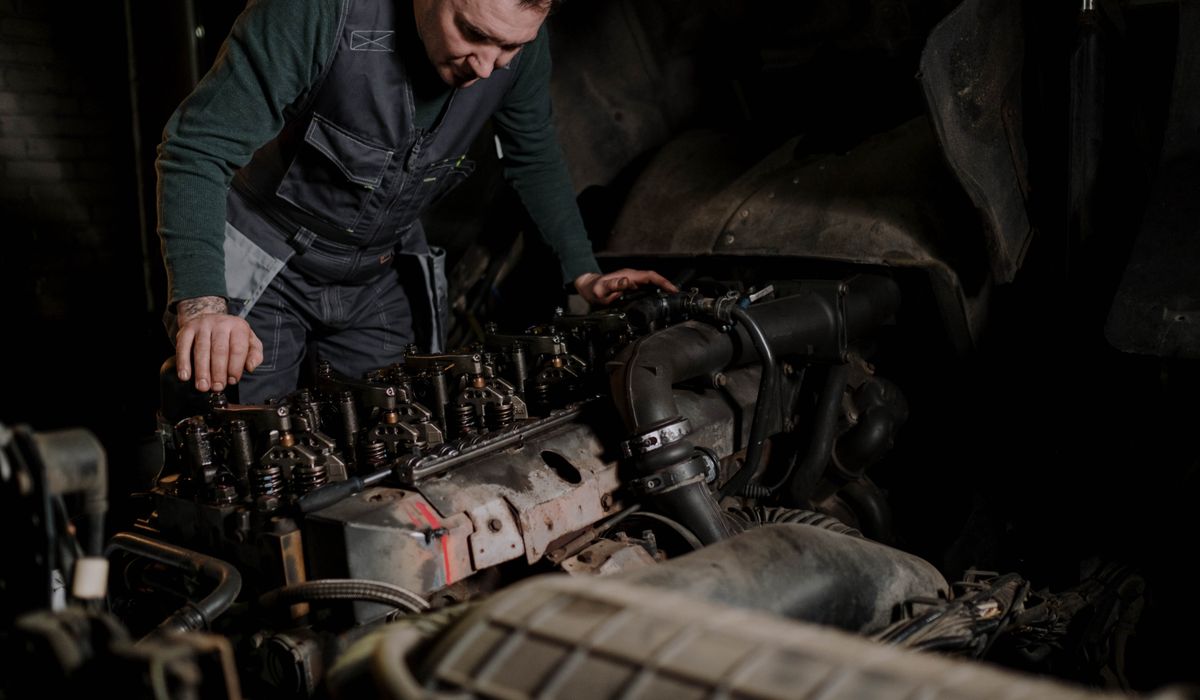
Open the bonnet when the engine is stone cold — never after the seller has "just warmed it up". A cold start reveals smoke, rattles and misfires that vanish once warm. Check the oil on the dipstick: dark is fine, milky or gritty is not. Look at the coolant for sludge, and check the brake fluid and power steering reservoir levels.
Then look at the tyres. They should be a matching set, or at least matched across each axle, with at least 3mm of tread — the legal limit is 1.6mm, but anything close to it will need replacing soon. Uneven wear across a tyre points to suspension or alignment problems, which are very common on cars that spend their lives on Sheffield's potholed streets.
- Push down on each corner — the car should settle in one movement, not bounce.
- Check the clutch bite point on a hill. Riding the clutch in city traffic wears it out fast.
- Test every switch: windows, mirrors, heater, air conditioning, lights and horn.
- Check the air conditioning blows genuinely cold. Regas is minor; a failed compressor is not.
The Test Drive That Actually Tells You Something
A five-minute loop around the block proves nothing. Insist on at least twenty minutes and a mix of roads. Start with a cold engine and listen. Then take it onto a stretch of dual carriageway or the motorway, and find a steep hill — Sheffield has plenty. You want to feel the clutch under load, hear the gearbox in every gear, and check the car tracks straight without pulling.
Brake firmly from speed on a quiet road. Any shudder through the pedal suggests warped discs. Let go of the wheel briefly on a straight, level stretch; drifting points to alignment or suspension issues. Afterwards, park up and look under the car again for fresh fluid drips, and check the wheels are not unusually hot.
Before You Hand Over Any Money
Never buy a car you have not seen in person, and never be rushed. Take a friend if you can — a second pair of eyes catches things you will miss. If you are not confident about mechanical checks, pay a local garage for an independent inspection. It typically costs far less than the first repair bill it prevents.
Finally, agree the price based on what you found, not what the seller hopes. Walk away if the history does not add up, if the seller refuses a cold start, or if anything feels evasive. There are plenty of honest used cars in South Yorkshire. With a bit of patience, you will find one that suits your budget and your daily drive.


Coding is used in almost all aspects of life and work now, be it directly or indirectly. It’s not just for companies in the tech sector. “An increasing number of businesses rely on computer code,
Coding is used in almost all aspects of life and work now, be it directly or indirectly. It’s not just for companies in the tech sector. “An increasing number of businesses rely on computer code,
Coding is used in almost all aspects of life and work now, be it directly or indirectly. It’s not just for companies in the tech sector. “An increasing number of businesses rely on computer code,